Inclusive Signage Welcomes Community to New Flagship Library

Photo of Multnomah County officials cutting a ceremonial ribbon beneath the concrete "East County Library" sign
Courtesy of Motoya Nakamura / Multnomah County

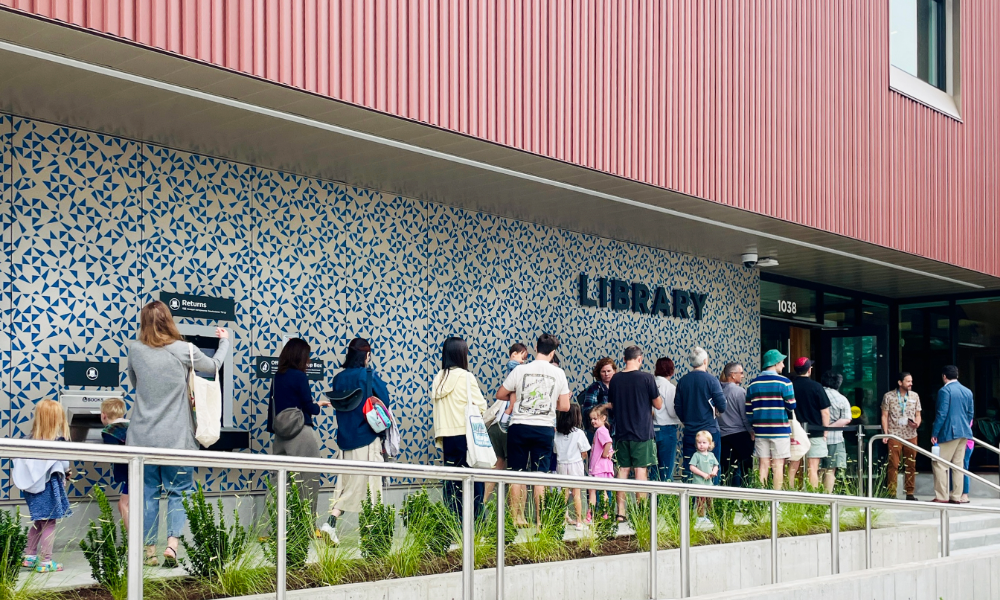
On May 16, Multnomah County Library celebrated a major milestone — the grand opening of its new flagship location, East County Library in Gresham, Oregon, and their largest library project since 1913. Designed by Holst Architecture, the 95,000-square-foot civic building represents a significant investment in community access, learning and cultural inclusion.

Excited officials ceremoniously cut the ribbon and community members eagerly streamed into the building to explore the collections, 200-seat auditorium, maker space, indoor/outdoor children’s play area, teen room, audiovisual studio, sensory rooms and views from the rooftop terrace.

East County Library is one of the final projects in a major bond-funded modernization and expansion of the Multnomah County’s library system. It also marks the final implementation of the Mayer/Reed-designed collection and wayfinding sign standards, creating a cohesive experience across all Multnomah County Library branches.

The system is designed to increase accessibility to the county’s diverse populations through multilingual and icon-based wayfinding. It is the first known library sign system in the nation to accommodate 5 languages and a testament to the county’s “We speak your language” approach to serving the community.

Two photos of exterior library signage. Left photo is the freestanding East County Library sign with blue and green Multnomah County Library logo. Right photo is a detail of the concrete sign that reads "East."

Increasing visibility in the community with boldly branded site identity signs is also core to the standards. Across a range of building styles and configurations, the blue and green county logo is welcomely familiar. In addition to the branded identity, Mayer/Reed collaborated with Holst to deboss the building name permanently into the board-formed concrete building exterior above the entrances at the East County Library, a mass timber design landmark. These words will endure, as will the community impact of the new library.

Posted May 19, 2026
Written by: Mayer/Reed
Categories: EVENTS  PROJECTS 

Student-Led Multicultural Center Opens at Central Washington University

Rendering of a turquoise wall with textural graphics that reads Multicultural Center
Courtesy of Opsis Architecture and Central Washington University

At Central Washington University in Ellensburg, Washington, the student-led CWU Multicultural Center celebrated its grand opening on April 10. Requested by students and partially funded by student fees, the center provides dedicated space for student cultural groups, student support and community gathering. Through a series of student and staff workshops, Opsis Architecture and Mayer/Reed collaborated to integrate culturally meaningful form, pattern and graphic elements into the interior design. Vibrant wall graphics, glass patterns and a values wall celebrating campus programs contributes to the center’s welcoming and inclusive identity.

Posted April 11, 2026
Written by: Mayer/Reed
Categories: EVENTS  PROJECTS 

Opening Day at the Hops Ballpark 

On April 7, the City of Hillsboro (and baseball fans from all over the region) celebrated the season-opening game at the brand-new Hops Ballpark. Mayer/Reed’s site design for the cutting-edge minor league baseball stadium contributes to the fun with a variety of open spaces for taking in a game. In addition to hosting Hops baseball, the stadium will provide a 7,000-person capacity venue for year-round concerts, festivals and events. Architecture by CannonDesign and Populous.

Posted April 08, 2026
Written by: Mayer/Reed
Categories: EVENTS  PROJECTS 

Shannon Simms Honored with Women of Vision Award 

Mayer/Reed Principal Shannon Simms, ASLA, has been named a 2025 Women of Vision Honoree by the Oregon Daily Journal of Commerce (DJC). Each year, the DJC recognizes an esteemed roster of women who are shaping the built environment in Oregon and Southwest Washington with their leadership, mentorship, technical skill and community involvement.  

“This award is a reflection of the incredible teams and communities I’ve had the privilege to work with,” says Shannon. “I’m honored to be recognized alongside others who are dedicated to designing spaces that foster connection, sustainability and a sense of belonging.”

As co-leader of Mayer/Reed’s urban design and landscape architecture disciplines, Shannon is known for her big-picture thinking and ability to bring clarity to complexity. She is a respected voice in public space design, inspiring clients, students and colleagues to view streets as vital landscapes that support a healthy, connected urban life. Her talent lies in reframing challenges and reimagining possibilities. Clients and design partners value her extraordinary ability to help them see their projects in a new light and her knowledge of the technical requirements necessary to bring these ambitious ideas to life. 

Shannon’s work is guided by a deep commitment to community. Whether through leadership in professional organizations or volunteering locally, she brings people together with creativity, passion and purpose. Recently, she helped organize and facilitate Streets of Possibility II: Downtown to the River—a workshop that brought nearly 40 urban designers and civic leaders together to reimagine downtown Portland’s connections to the Willamette riverfront. Her efforts are changing the conversation about how our city reaches the long-term goal of transforming Portland’s urban core into a series of livable neighborhoods. 

As a mentor and advocate, Shannon supports emerging designers within Mayer/Reed, across the profession and in academic programs. She uplifts colleagues, making time to mentor and creating space for quiet voices—especially supporting women navigating careers in the built environment. Outside of work, Shannon finds joy in giving back and fostering meaningful connections throughout the region. She has volunteered with the Portland Parks Foundation Paseo, Portland Winter Light Festival, Cycle Oregon Gravel Ride and Friends of Trees. 

At the DJC’s Women of Vision celebration on October 23, Shannon shared the stage with an inspiring cohort. While the evening recognized individual achievements, it also served as a reminder of the collective progress happening across our industry and an inspiration for the next generation of leaders, many of whom were in the room that night—watching, learning and envisioning what comes next.