We’re excited to be featured in a recent Portland Monthly article about the future of Tom McCall Waterfront Park and Portland’s relationship to the riverfront.
The article highlights our Central City Waterfront Urban Design Study which explores ways the waterfront district can evolve into a more active, inclusive and connected part of our city. Mayer/Reed Principal Shannon Simms, who led the study, continues to be a driving force for change, facilitating workshops with the local design community, city officials and interested citizens. Read the full article in Portland Monthly.
On May 5 in Portland, Portland Community College marked the completion of the Health Technology Building West at the Sylvania Campus. Delivered through a design-build collaboration between Woofter Bolch Architecture, Fortis Construction and MIXdesign, the facility expands hands-on healthcare training opportunities for students across the region. Mayer/Reed implemented and expanded existing sign standards to support clear navigation, including within the facility’s new all-user locker rooms.
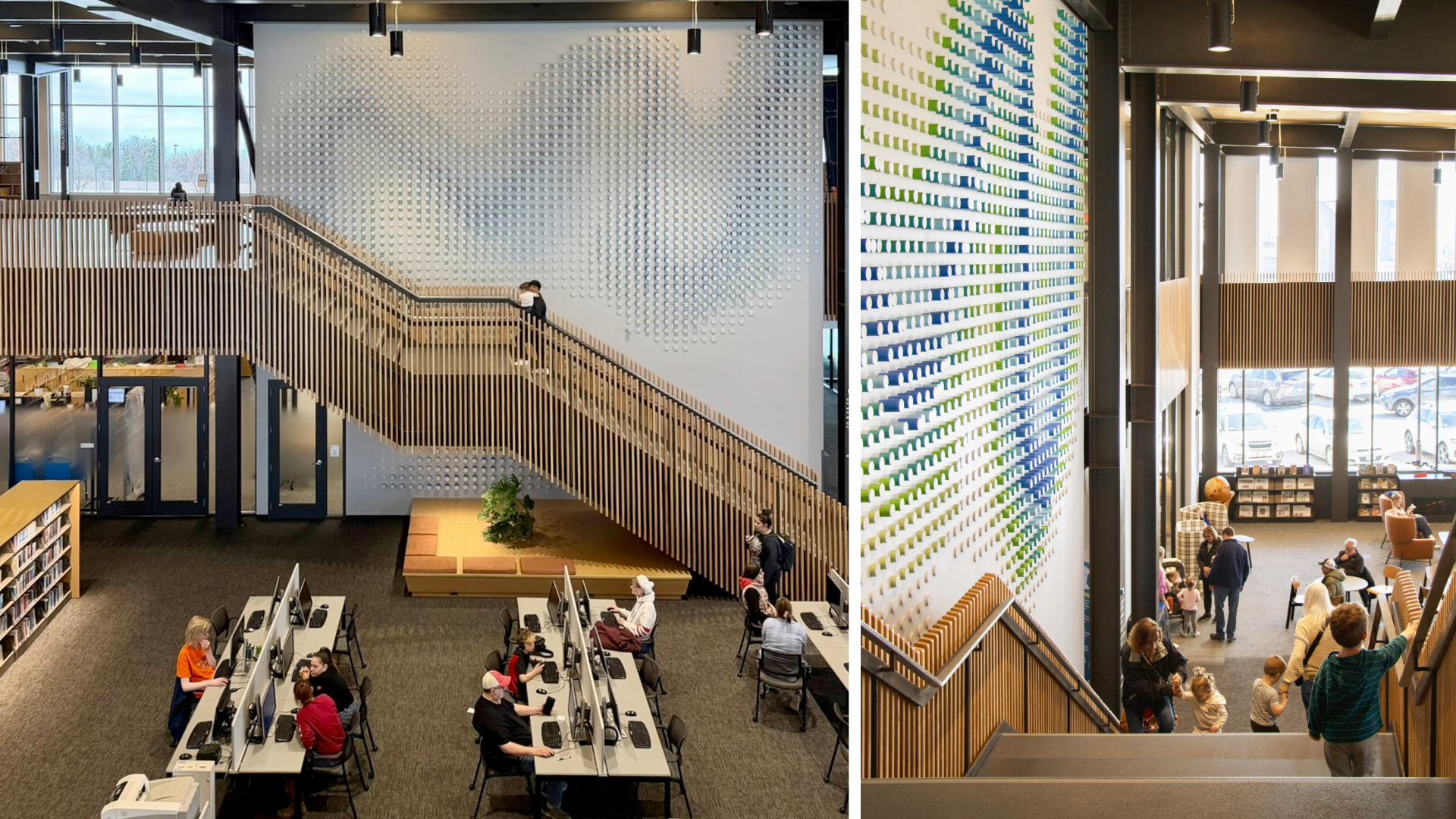
In Moorhead, Minnesota, the new Moorhead Public Library and Community Center opened on April 8 as part of The Loop, a vibrant mixed-use space developed by the City of Moorhead and the Lake Agassiz Regional Library. The Loop is the first opening in series of projects fulfilling a masterplan to remove a defunct shopping mall and parking lots, return to the city grid and create a new civic hub with adjacent park. Alongside JLG Architects and Miller Hull, Mayer/Reed worked with the client to create the facility brand, The Loop, named for the iconic walking loop that circles the upper level of the building, providing a place to walk during the harsh Midwest winter. Mayer/Reed designed the building identity, collection wayfinding and a two-story feature wall celebrating the community’s connection to the Red River.
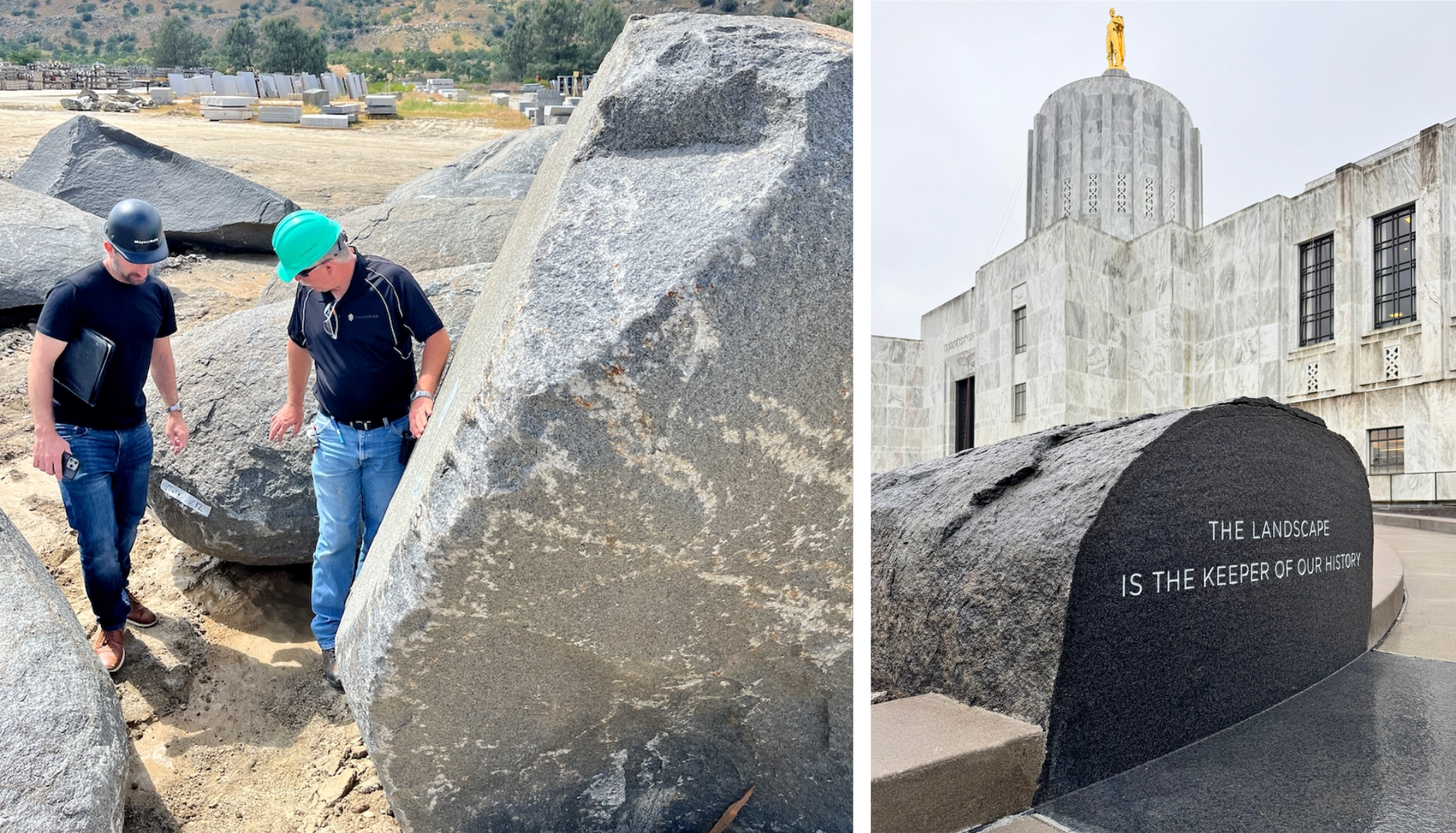
At the Oregon State Capitol in Salem, Oregon, massive granite boulders emerge from the landscape, artfully carved by master masons and precisely placed to help tell a powerful story of Indigenous voices. As landscape architect on the new universally accessible main entry and plaza, Mayer/Reed’s work began long before a single stone was craned into place.
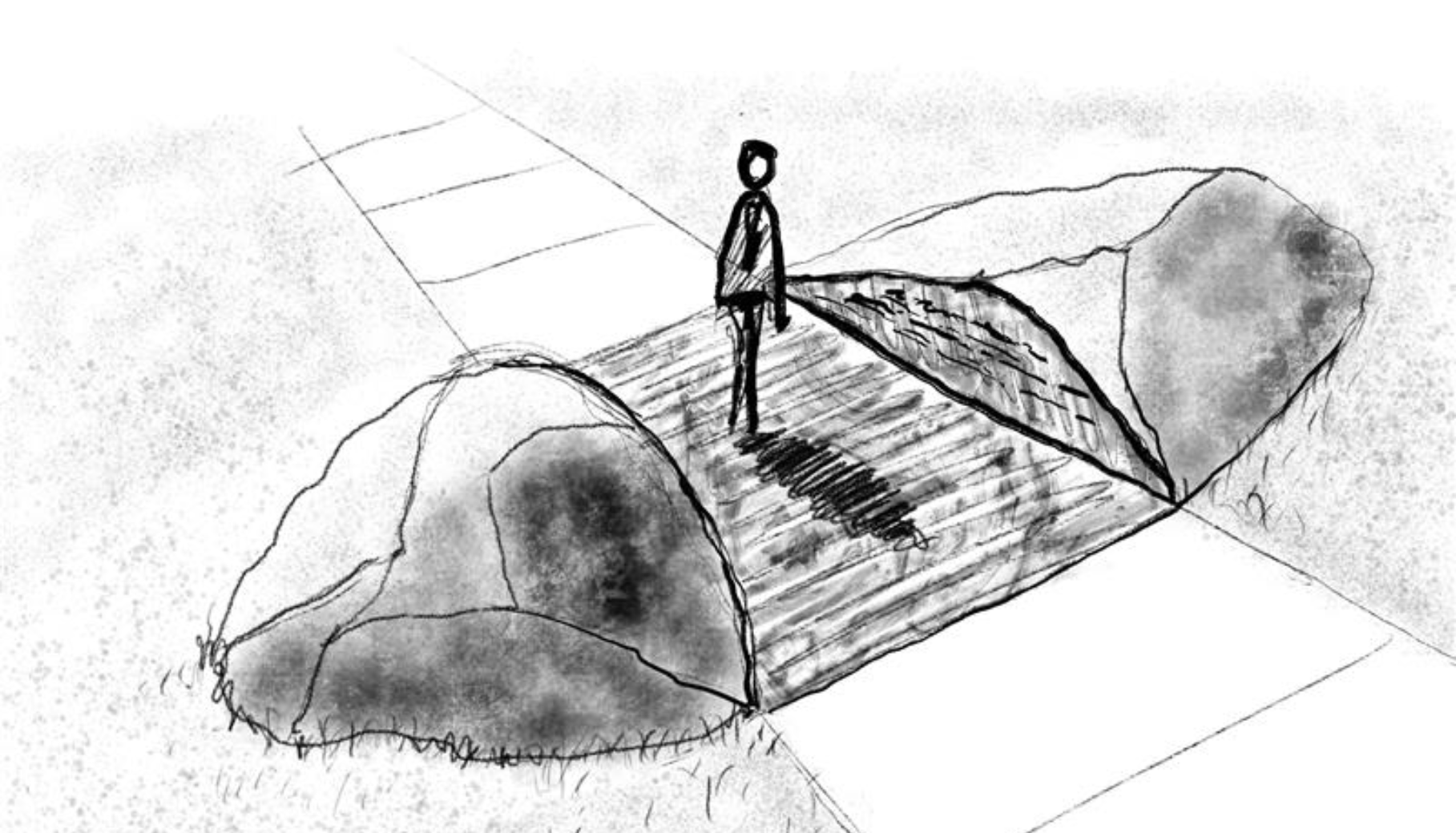
Mayer/Reed’s vision for the entry plaza integrates a series of boulders that intentionally interrupt the formal design elements of the landscape, carved in close collaboration with artist and linguist Dr. Phillip Cash Cash. Guided by our preliminary sketches, we traveled to the source to hand-select each boulder. At the quarry, we used LiDAR technology to create photorealistic 3D scans, which we then incorporated into our working design model.
Boulders have unique “personalities.” The digital scans captured the exact dimensions and character of each boulder and allowed us to accurately communicate these intricacies to our collaborators — from the stone masons to the crane operators. The vision came to life through thoughtful design, technical precision and hands-on collaboration.