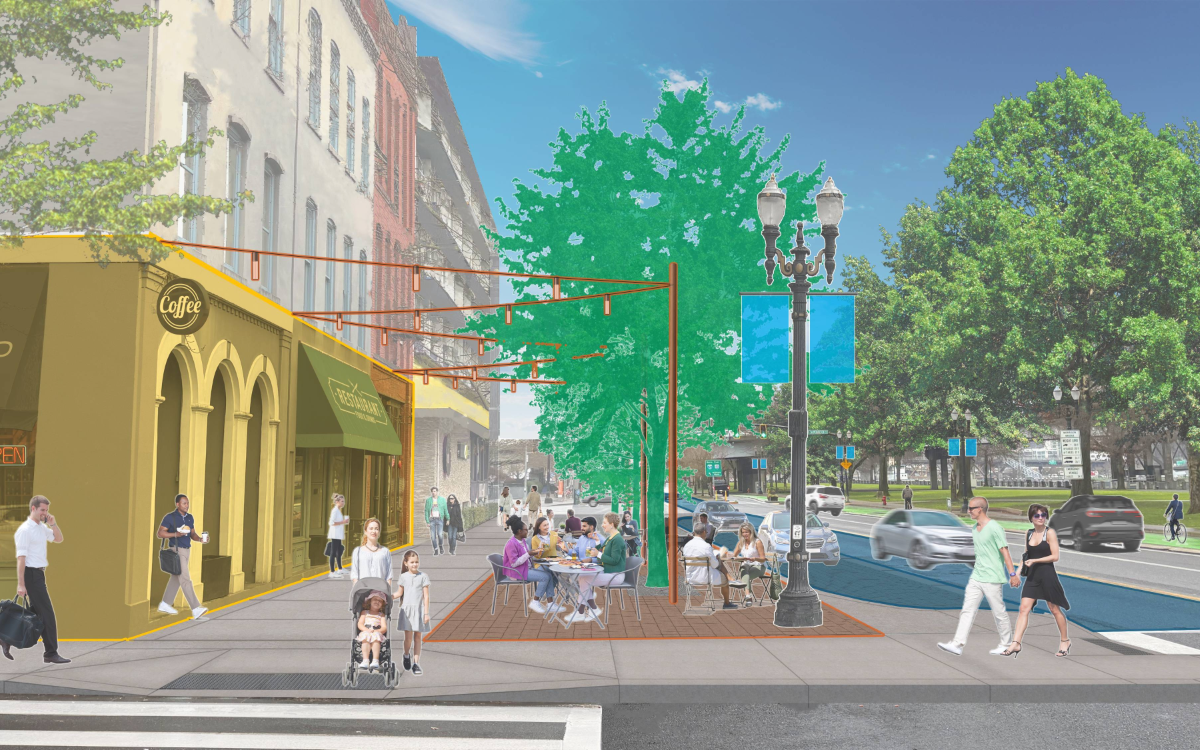
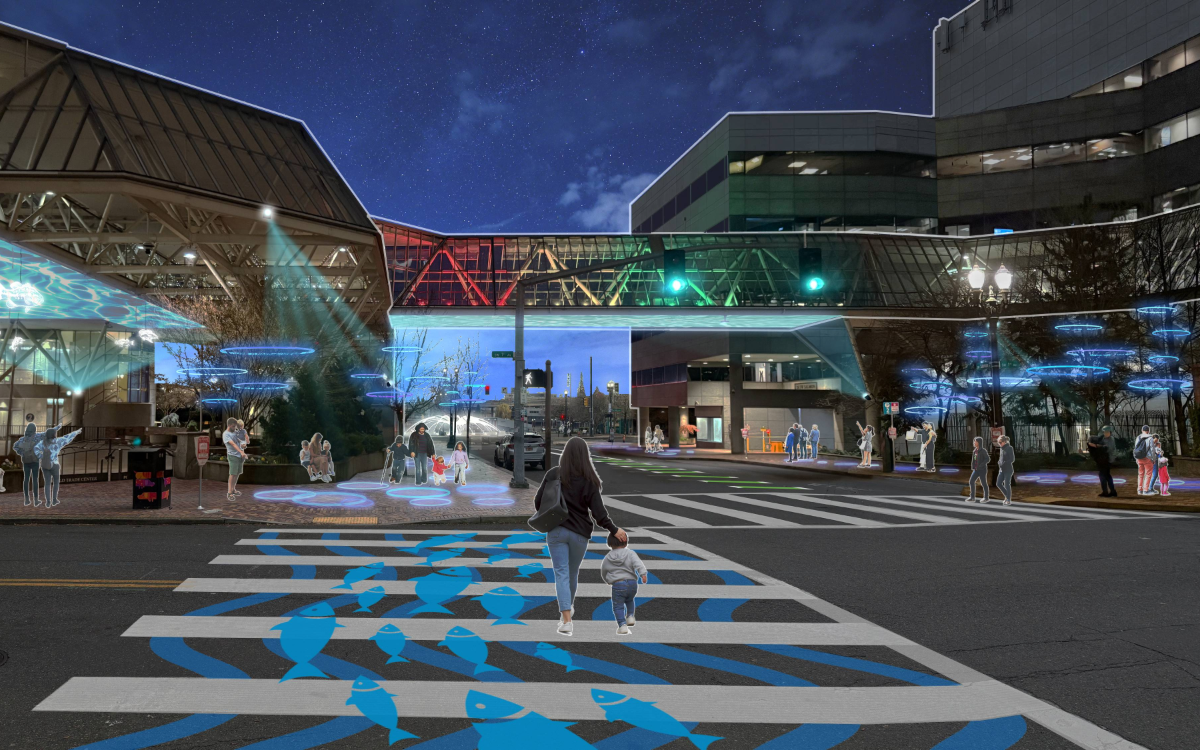
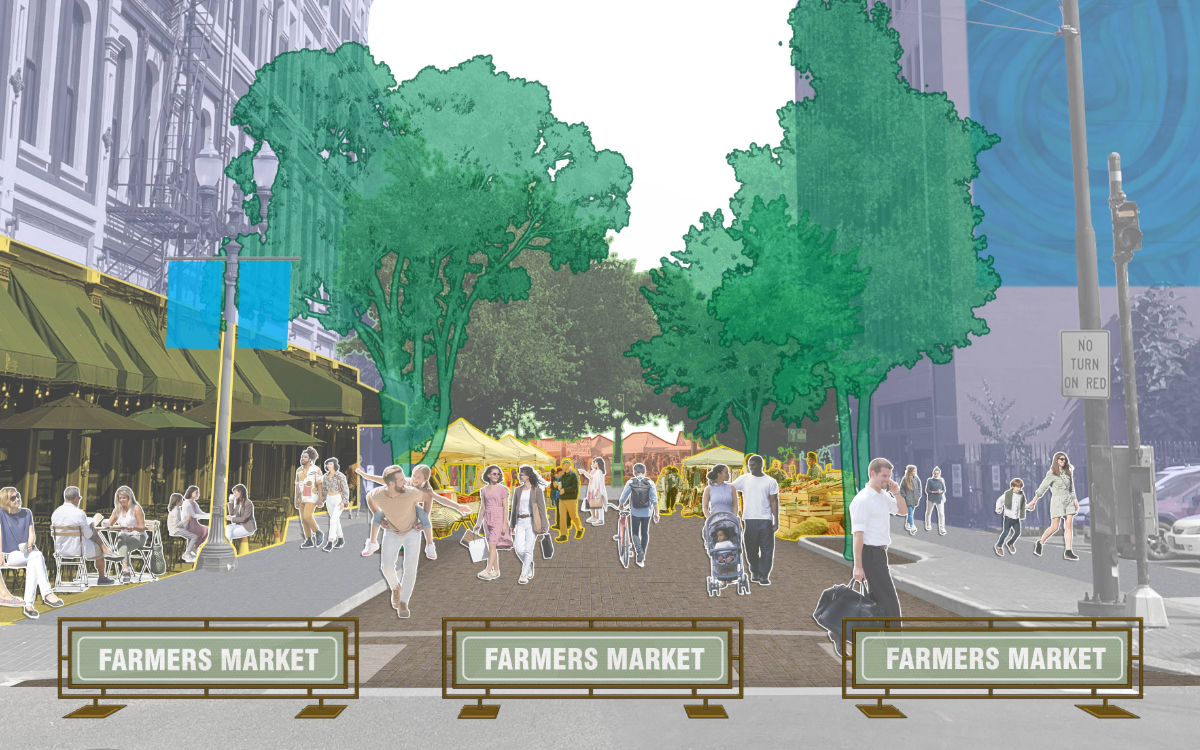
Momentum is building to transform downtown Portland’s relationship with the Willamette River. At the center of the conversation is the Central City Waterfront Urban Design Study, created by Mayer/Reed for the City of Portland Bureau of Planning and Sustainability. The study identifies opportunities for urban design interventions and redevelopment in the downtown core, presenting a vision for the waterfront and a menu of strategies—from tactical improvements to long-term projects—to guide public investment, encourage private development, support community initiatives and spark future collaboration.
Naito Parkway reimagined with a west side pedestrian promenade that supports adjacent businesses and residences.Artistic lighting under the skywalks of the World Trade Center on Salmon Street, making every night feel like the Portland Winter Light Festival.Historic streetscapes on SW Yamhill and Morrison that extend to the waterfront, strengthening the identity of the Yamhill Historic District and creating space for events.
The study is gaining attention across the city—it was recently featured in Portland Monthly and presented to the AIA Oregon Urban Design Panel in March. In addition, Mayer/Reed Principal Shannon Simms is working closely with Design Portland to further the conversation with local leaders on reimagining downtown Portland. Stay tuned for future events and opportunities to get involved.
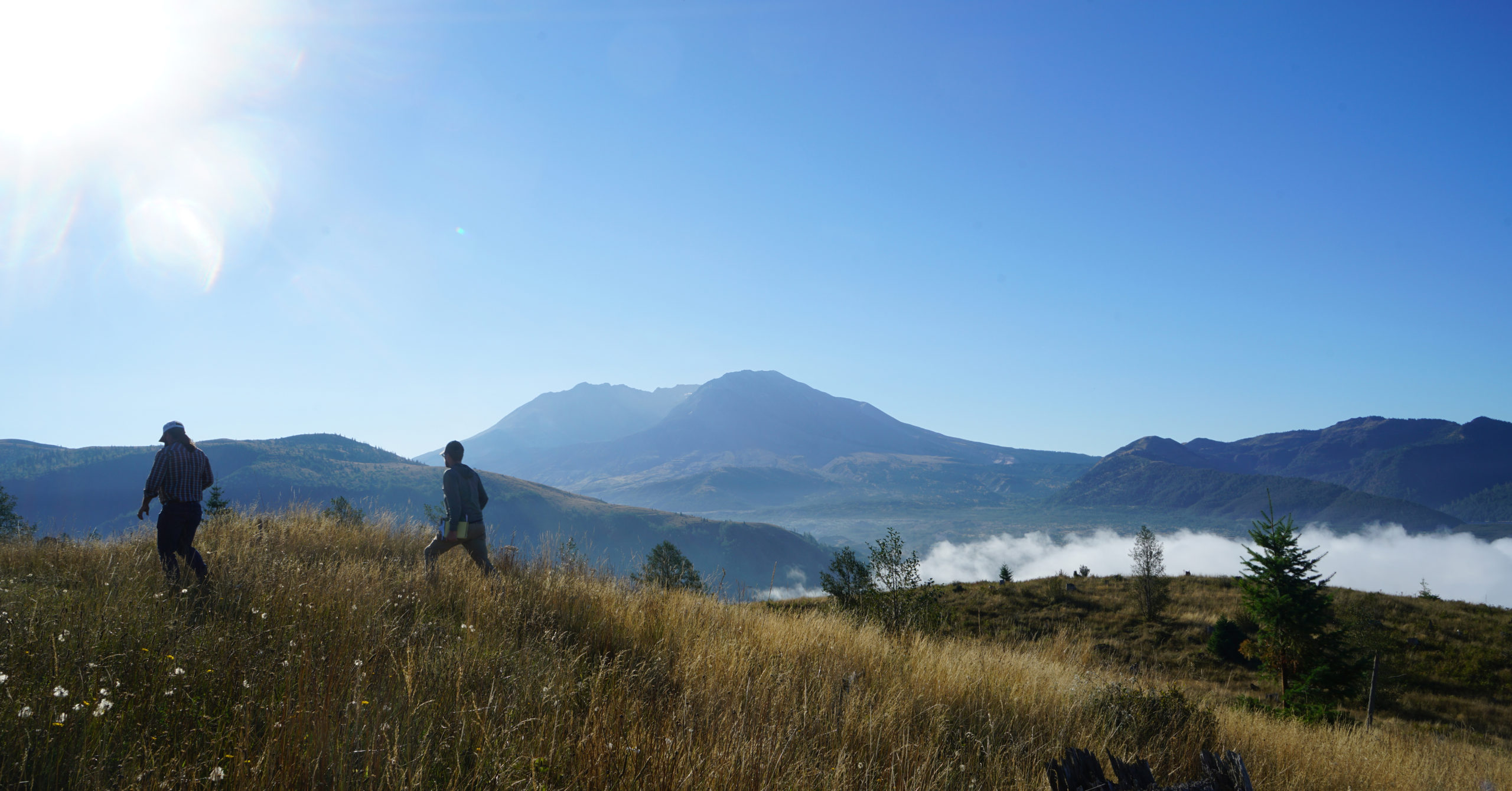
I’ve been climbing Mt. St. Helens since 1998, and each summit of the raw terrain is its own unique adventure. As I completed my fifth climb of the 2025 season, I reflected on the role the mountain plays in my life.
Loowit, as nearby Indigenous people call it, means “smoking mountain,” and on May 18, 1980, this moniker became a reality. The eruption blew 1,300 feet off its peak and triggered the largest landslide in recorded history. Forests were leveled, ash traveled hundreds of miles, and dozens of lives were lost. Today, the mountain continues to remind us of resilience, transformation and respect for nature’s power.
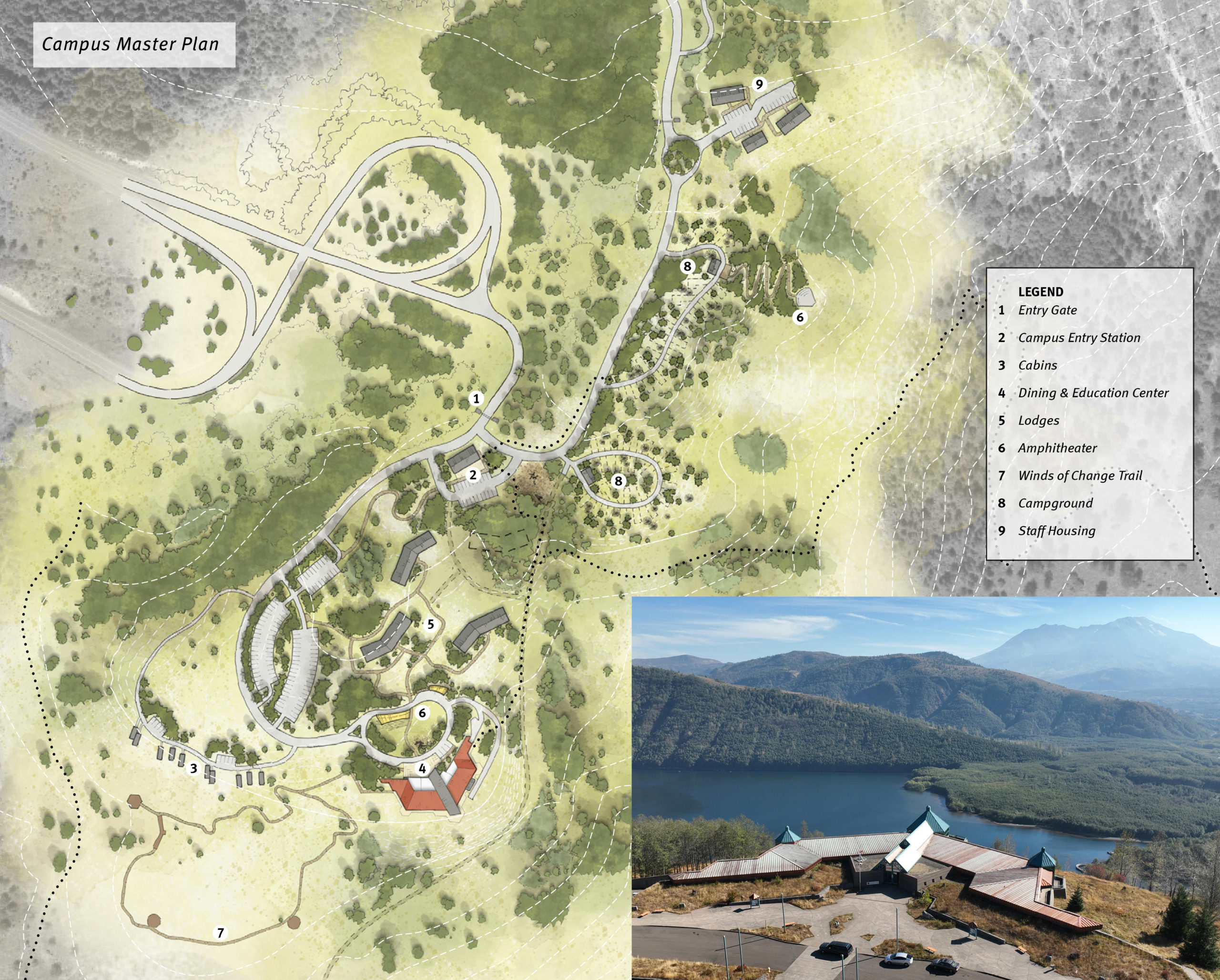
As a principal landscape architect at Mayer/Reed, I am fortunate to connect my personal love for the outdoors with my professional work. In 2018, we worked on a master planning team with Hennebery Eddy Architects for Mt. St. Helens Institute (MSHI), a nonprofit dedicated to connecting people of all ages to the volcano through education and exploration. The site, set directly in line with the 1980 eruption, called for a careful balance of ecological protection and human activity. We explored what a future campus could look like with cabins, campgrounds, staff and student housing and a welcome center, all designed with respect for the landscape, environmental resilience and flexibility, connection to the local ecology and community and universal access. In other words, a place to bring people closer to nature and each other.
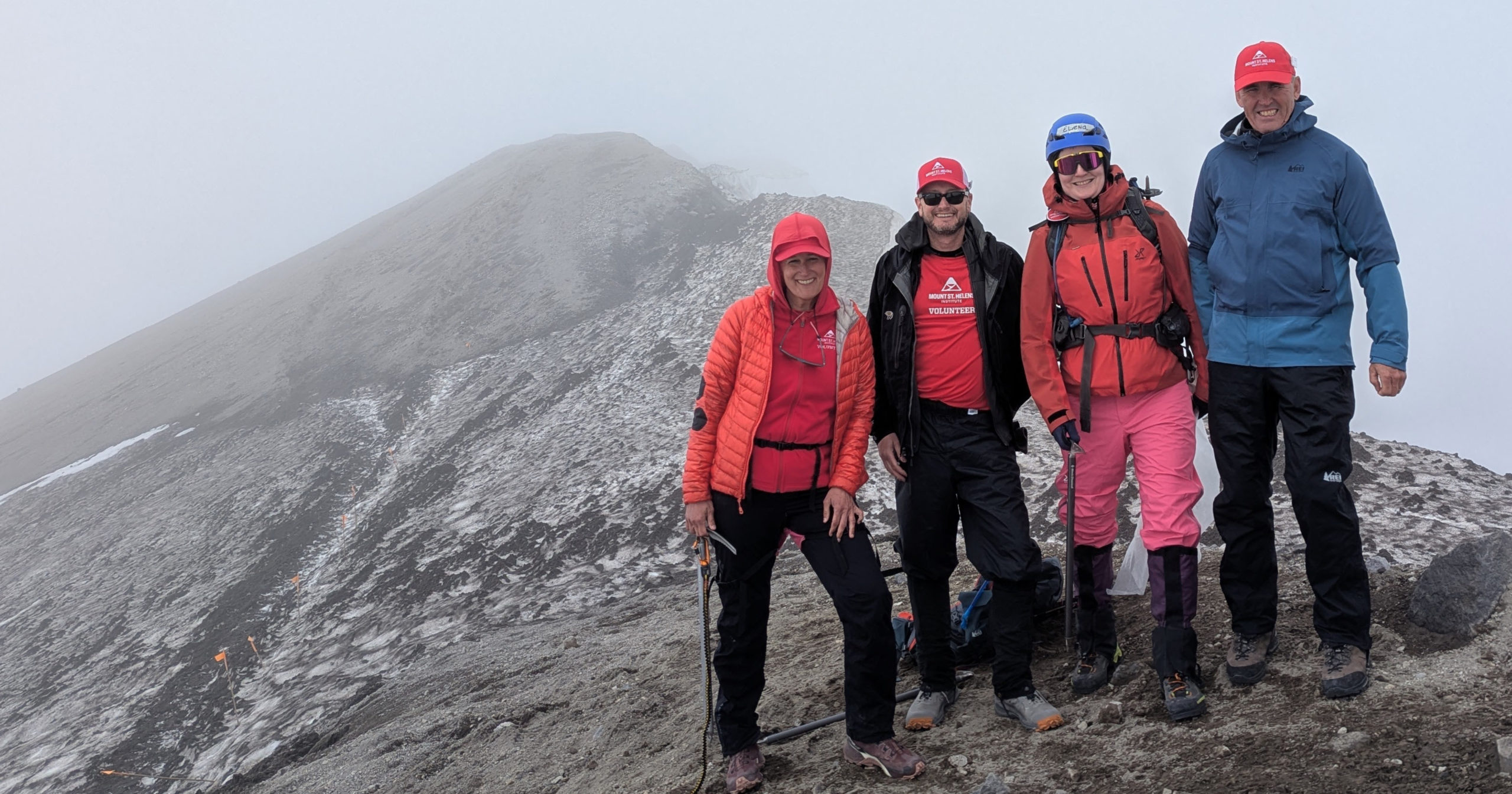
This year, my passion for Mt. St. Helens found a new avenue. After weeks of online courses, CPR and first aid certification and field training, I officially joined the MSHI volunteer ranks as a Climbing Steward. My bright red uniform signals to hikers that I’m here to help, whether it’s offering water or snacks, giving advice on the route, providing emergency support or simply being a source of encouragement. In a time of federal cutbacks and limited U.S. Forest Service resources and staff, volunteer trail support is more crucial than ever.
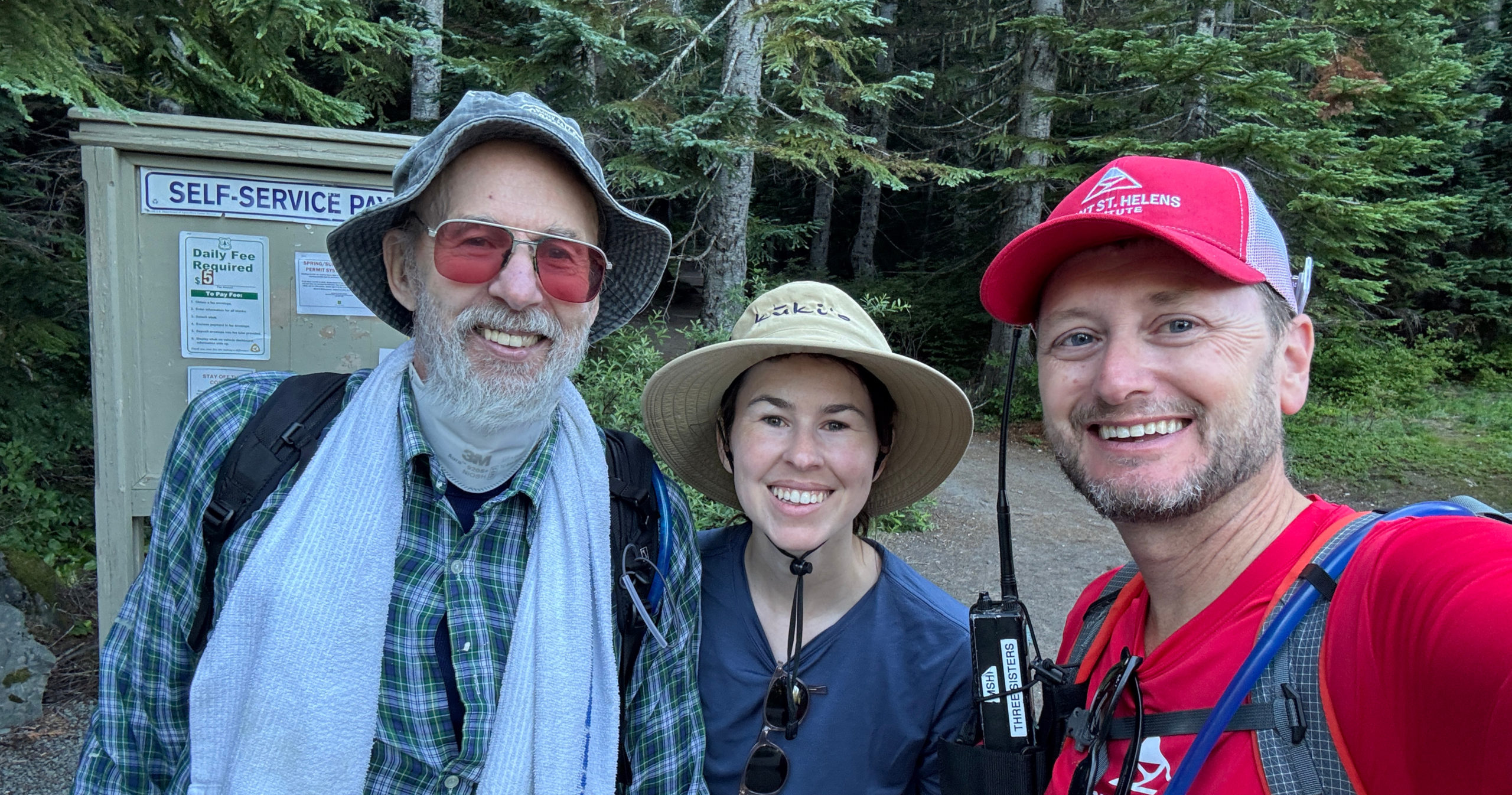
One of my favorite moments as Climbing Steward this summer was meeting David and his daughter, Neah. Decades ago, David testified before Congress in support of making Mt. St. Helens a National Monument, and here he was at 72, climbing with that same spirit. A nod to his past climbs, Neah carried his well-worn Kelty pack from the ’70s. On the way down, I guided them through the boulder fields and hiked with them to the trailhead. Their gratitude was unforgettable. It struck me that stewardship isn’t just about safety—it’s about connection.
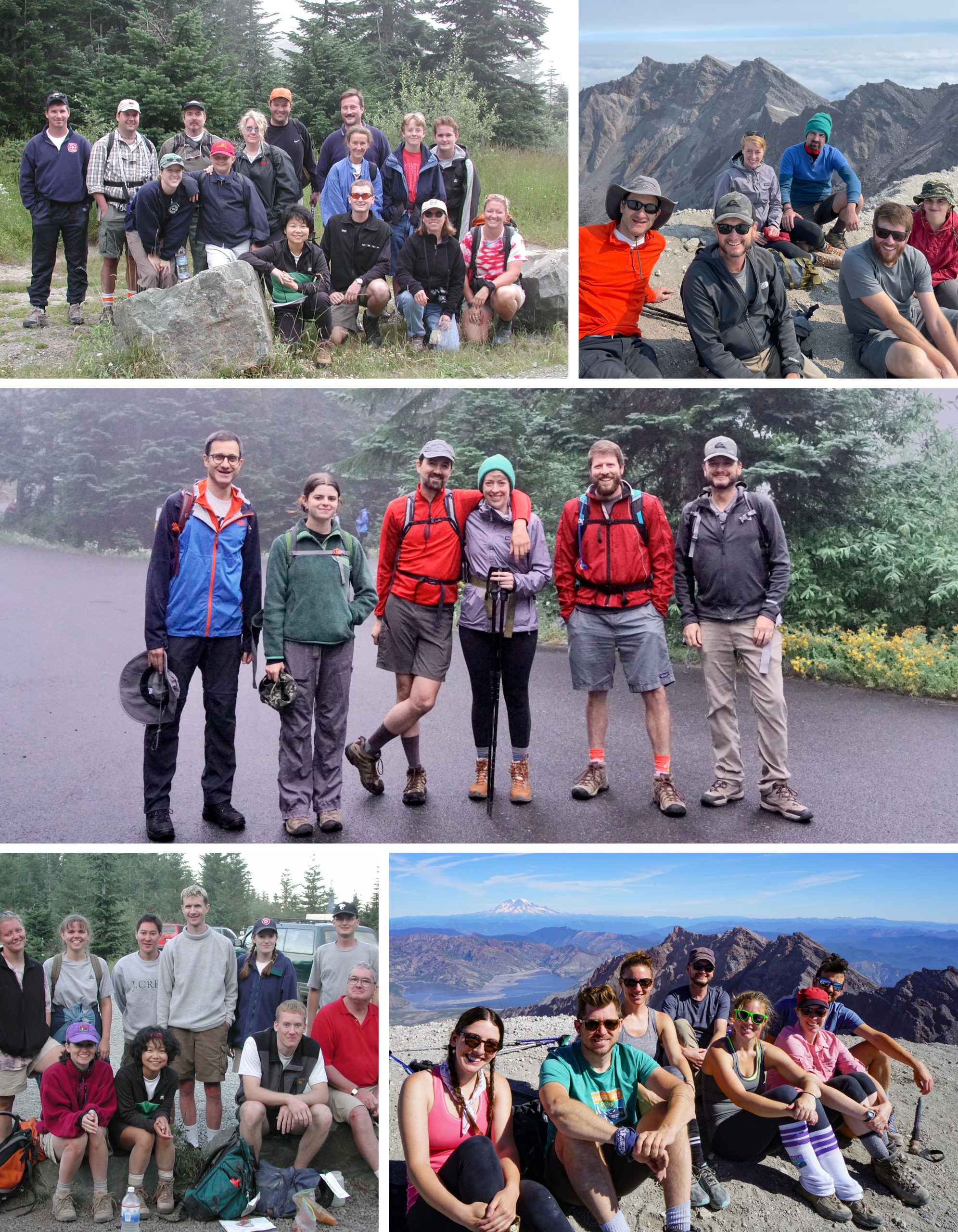
Mayer/Reed has a tradition of hiking Mt. St. Helens together, as far back as 2001 and as recent as this year. These group treks and my personal climbs remind me that our work doesn’t end at the office. When passion meets profession, it becomes more than a job. It becomes a way of life.
The Society for Experiential Graphic Design (SEGD) Voices of Experience series celebrates the legacy of Mayer/Reed Founding Partner Emeritus Michael Reed, FSEGD.
In this inspiring short film, Michael reflects on his career, design philosophy and impact on the built environment. He joins a lineup of influential experiential designers including Bruce Mau, Chris Calori & David Vanden-Eynden, Donald Meeker, Richard Burns & John Barry, Wayne Hunt, and Lance Wyman.
“Across his career, Michael has adhered to one guiding principle: the privilege of designing information systems for the public comes with the responsibility to ‘do the right thing.’ His work demonstrates that great design is not an act of personal expression but of public service.”
Read more about Michael’s career and watch the video here.
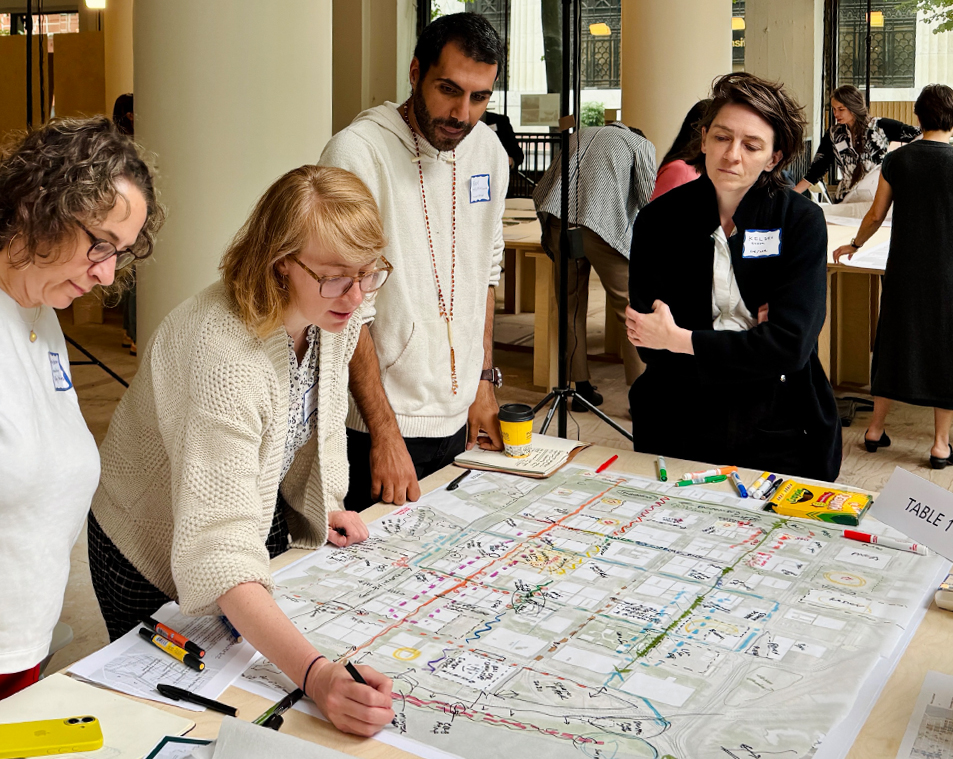
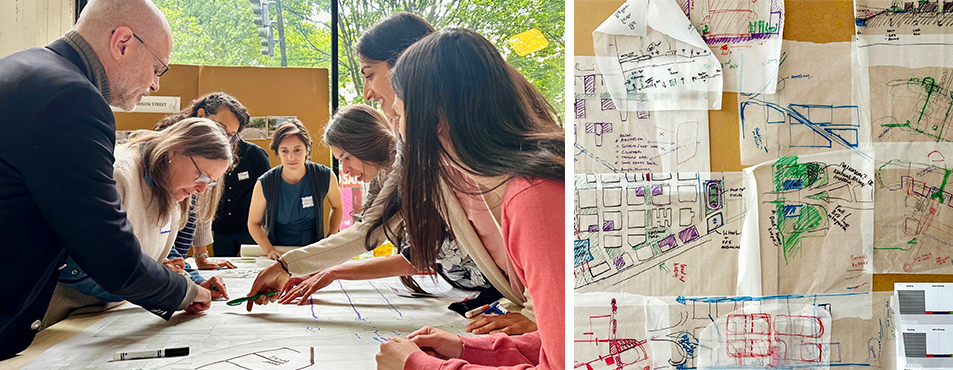
Building on the momentum of this spring’s Streets of Possibility event, I helped organize a workshop on June 13 to brainstorm tangible ideas for the future of downtown Portland, Oregon. Nearly 40 urban designers and creative thinkers gathered with tracing paper, markers and optimism — ready to reimagine downtown’s street network and its connections to the Willamette riverfront.
As one of the event organizers, I designed maps and created prompts to spark ideas and nudge the creative process. We asked big questions and proposed bold ideas: Why not this? What about that? Could it look like this? The ideas flowed as freely as our markers until late afternoon.
Downtown Portland is undergoing transformation. It won’t return to what it was, nor should it. Our challenge, rather, is to help shape what it will become. Over 40% of downtown Portland’s land lies in the public realm of streets. Waterfront Park is an enormous, underutilized asset most of the year with untapped potential for connection, culture and community. This exercise helped us envision downtown as one of Portland’s neighborhoods — more than a place to just work or visit; a place to stay, play and simply be.
Real change requires action. Coming together to share ideas and see new perspectives is critical to our city’s path forward. Thank you to Randy Gragg and Will Smith of the PDX Design Collaborative for opening the doors of the JK Gill Building to host the workshop and the designers who showed up eager to sketch, discuss and push each other to think bigger and more inclusively.
The day wrapped up with a happy hour open to the broader community and even more voices contributed to the dialogue. One seasoned participant remarked, “This is the way we used to do it” — a compliment that reminded us we’re returning to a civic culture where urban design is visionary, not reactive. Follow-up conversations are happening, and we’ll share a summary of the workshop to ensure the thinking can live on and inspire action at all levels. We invite everyone — elected leaders, civic organizations, business owners, residents — to keep imagining. Because Portland’s next chapter is unwritten, and together, we can shape it.