
Services
- Landscape Architecture
- Urban Design
Mayer/Reed Central City Waterfront Urban Design Study
default
default
default
default
default
default
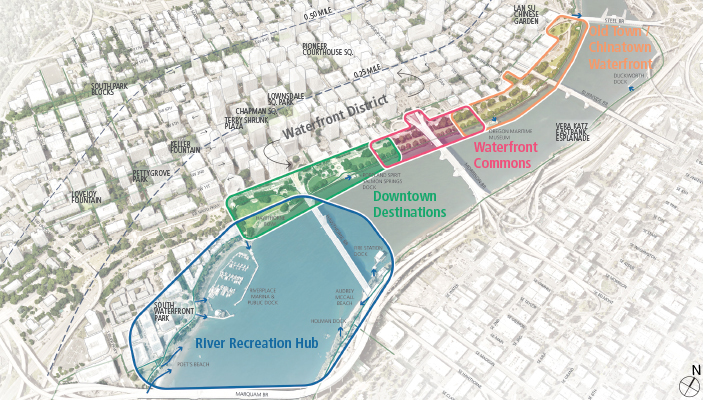
Momentum is building to transform downtown Portland’s relationship with the Willamette River. Guiding the conversation is the Central City Waterfront Urban Design Study, developed by Mayer/Reed for the City of Portland Bureau of Planning and Sustainability.
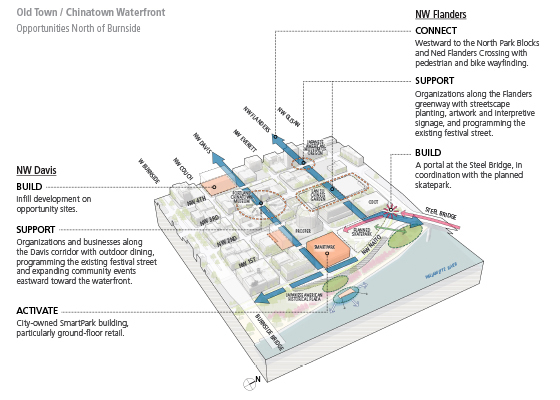
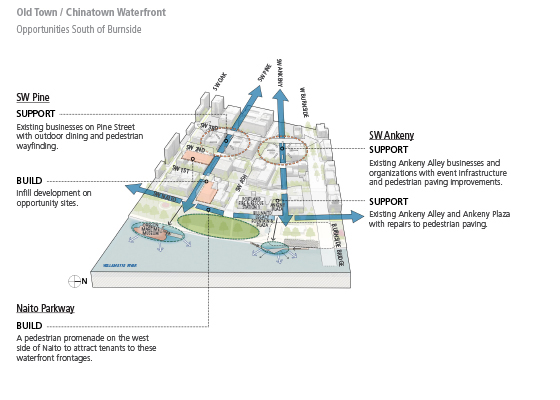
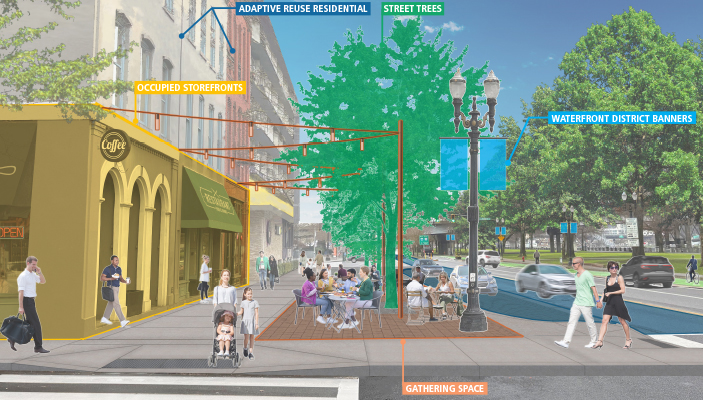
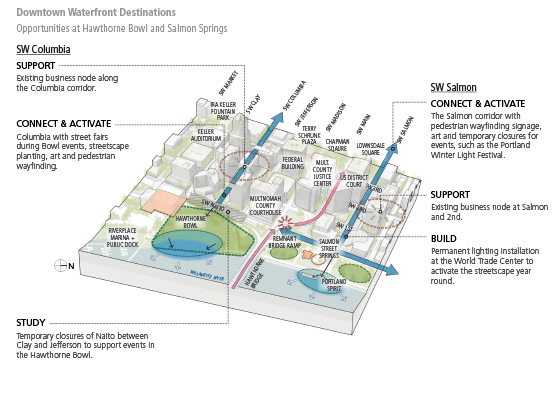
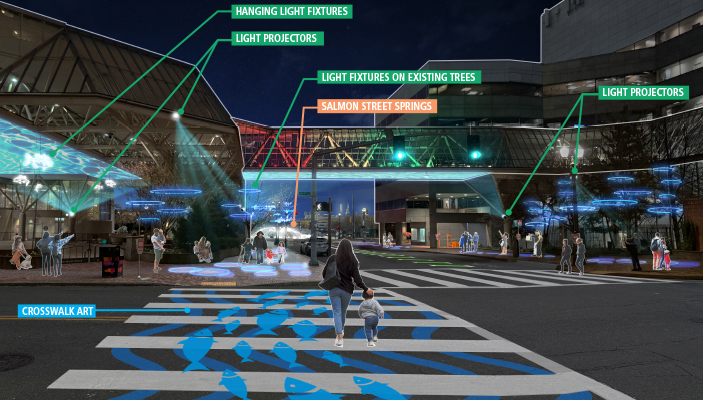
The firm worked with the City, public and stakeholders to identify opportunities for urban design interventions and redevelopment. The study envisions Portland’s waterfront as an anchor for a new downtown district that includes attractions for residents, workers and visitors. This collection of strategies focuses public investments, facilitates private development and supports community initiatives in the district east of 4th Avenue in Old Town/Chinatown, Downtown and South Downtown.
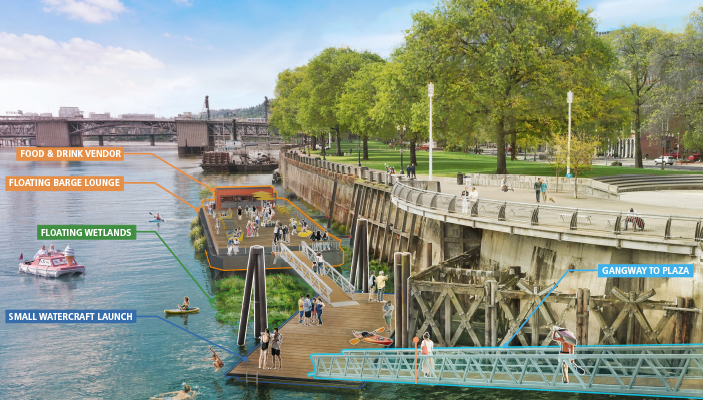
The report details and illustrates these urban design concepts and offers a menu of ideas varies from interim, temporary and tactical treatments to more permanent medium-term projects. It presents a vision for the waterfront that aligns the energies of the bureaus within the city government and can be used as a springboard for future collaboration with community groups, decision makers, grant writers and the general public.
Renderings: Mayer/Reed
Owner: City of Portland
Mayer/Reed Central City Waterfront Urban Design Study
default
default
default
default
default
default
Momentum is building to transform downtown Portland’s relationship with the Willamette River. Guiding the conversation is the Central City Waterfront Urban Design Study, developed by Mayer/Reed for the City of Portland Bureau of Planning and Sustainability.
The firm worked with the City, public and stakeholders to identify opportunities for urban design interventions and redevelopment. The study envisions Portland’s waterfront as an anchor for a new downtown district that includes attractions for residents, workers and visitors. This collection of strategies focuses public investments, facilitates private development and supports community initiatives in the district east of 4th Avenue in Old Town/Chinatown, Downtown and South Downtown.
The report details and illustrates these urban design concepts and offers a menu of ideas varies from interim, temporary and tactical treatments to more permanent medium-term projects. It presents a vision for the waterfront that aligns the energies of the bureaus within the city government and can be used as a springboard for future collaboration with community groups, decision makers, grant writers and the general public.
Owner